
Supporting Someone Through Grief: A Guide

When someone you care about experiences a profound loss, it is entirely natural to want to fix things, ease their pain, or find the "perfect" words to make them feel better. However, one of the hardest truths about grief is that it cannot be fixed. It is not an illness to cure, but a deeply personal, unpredictable process that must be lived through.
Often, the fear of saying or doing the wrong thing causes people to pull away right when they are needed most. If you are wondering how to be there for a grieving friend or family member, this guide offers practical, heartfelt ways to offer meaningful support.
1. Offer Your Presence, Not Answers
The most powerful thing you can offer someone who is grieving is simply being there. You don’t need to be a counselor, and you don’t need to have a profound philosophy on life and death.
• Listen without trying to fix: Let them cry, vent, or sit in silence. Your job isn’t to steer them toward the "bright side," but to sit with them in the dark.
• Acknowledge the pain directly: Avoid cliches like "They’re in a better place" or "Everything happens for a reason." Instead, try honest, simple phrases:
- "I am so incredibly sorry for your loss."
- "I don’t know what to say, but I am here for you."
- "I am thinking of you and [Name] every day."
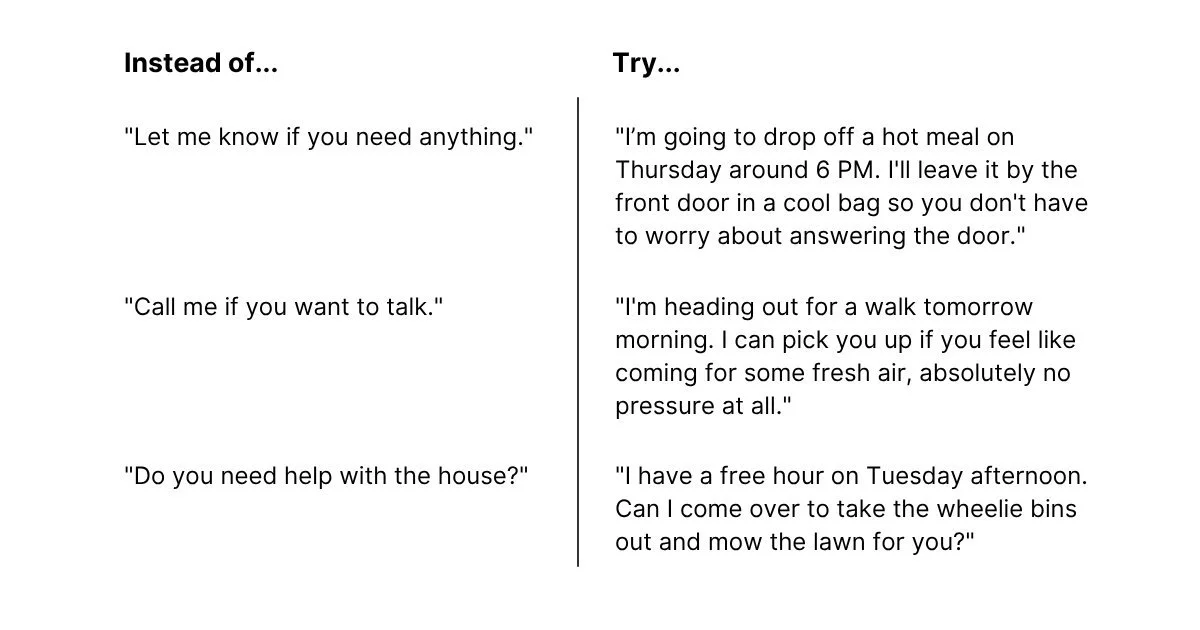
2. Shift from "Let Me Know If You Need Anything" to Direct Action
When someone is in the thick of acute grief, making decisions or identifying their own needs can feel completely overwhelming. Asking them to "let you know" puts the burden of reaching out entirely on them.
Instead, offer specific, tangible help that requires a simple "yes" or "no."
3. Understand that Grief Has No Timeline
In the days and weeks immediately following a death, the bereaved are often surrounded by family, practical support, and sympathy cards. But as the funeral passes and the rest of the world returns to its normal rhythm, the silence can become deafening.
True support means staying the course for the long haul:
• Keep checking in: A text message three, six, or twelve months down the line saying, "Thinking of you today" can be a lifeline.
• Say their name: People often avoid mentioning the person who died because they worry it will bring back sad feelings. The truth is, they are already thinking about them. Hearing their loved one's name is usually a profound comfort.
• Anticipate difficult milestones: Birthdays, anniversaries, Christmas, and the anniversary of the passing are incredibly challenging. Reach out a few days before these dates to let them know they aren't facing them alone.
A Note on Boundaries: Supporting someone through grief requires patience. They might not reply to your messages, they might cancel plans at the last minute, or they might seem angry. Try not to take this personally. It is a reflection of their pain, not your relationship.

4. Watch for Signs of Overwhelming Struggle
While everyone experiences grief differently, sometimes the weight of loss can evolve into depression or prolonged grief disorder. While you cannot be their therapist, you can gently help them seek professional support if you notice:
An inability to manage basic daily routines (eating, bathing) weeks after the loss.
Persistent, severe feelings of worthlessness or a total withdrawal from life.
Expressions of despair or a feeling that life is no longer worth living.
If you notice these signs, gently encourage them to speak with their GP, or offer to help them look into local bereavement support groups or counseling services.
Final Thoughts
You cannot take away the pain of a loss, but you can ensure that your loved one doesn’t have to carry it entirely alone. By offering quiet consistency, practical help, and an open heart, you provide the scaffolding they need to slowly rebuild their life around their grief.
At John Duckworth, we have walked alongside families through their most difficult days for generations. If you or someone you care about needs guidance on bereavement support services in our community, please never hesitate to reach out to us. We are always here to help.